
What helps neurodivergent employees thrive?
The short answer: you have to want to do it.
You can know all the ADHD, autism, dyspraxia stuff in the world. You can read every dry policy, attend every webinar, even memorise all the “correct” language so no-one jumps down your throat when you post stuff on LinkedIn.
But if you don’t actually care? It won’t make a mouse’s toenail of difference. Caring is the magic ingredient. The rest is just icing.
I know this because I’m neurodivergent. I’ve lived neurodiversity; I work with it, manage it and talk about it all over the world. I’ve alongside hundreds of neurodivergent colleagues in corporates, charities, public institutions, and even tiny businesses. I’ve seen the good, the bad, and the “seriously, why would anyone do that?” moments. And yes, I’ve also implemented accommodations hundreds of times, usually before anyone even asked for them. Because if you only make the “special needs” people do extra work by asking for “accommodations”, it’s not really inclusion.
Neurodiverse inclusion examples that really worked
Let’s talk real examples. One colleague struggled with prioritisation. Not just “I have too much to do”. We were seeing projects falling through the cracks, stress levels rising, and they told us how overwhelmed they were.
We offered them some tools and strategies which included a priority matrix, a microtasking plan, and offered more frequent check-ins on intense projects. Not as a way of hovering over them as some kind of human helicopter, but just a casual, “Hey, you OK? Do you need anything? How is that going? Do the next bit then come for a coffee with me.”
The work got done, but that wasn’t the important bit (unless you are their manager, in which case it was). The real change was that they told us they felt empowered, not micromanaged. They said it was one of the first times at work they felt supported as a neurodivergent person.
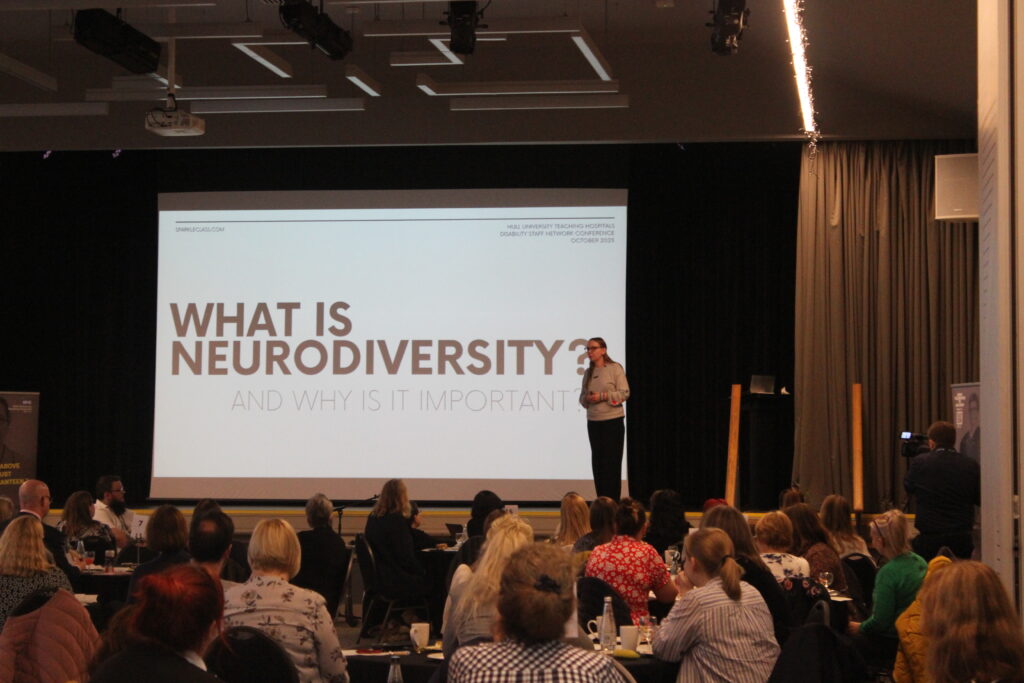
Here’s another example which I know is a bit self-indulgent: my own training sessions. I used to run them for an hour straight. Around 45 minutes, people started flagging. Eye gazes drifting towards the window. Hands reaching for phones. Answering fewer questions.
So I added breaks at 45 minutes (this was in addition to clear instructions that they could step out any time they wanted to anyway). And people took these breaks. They’d grab a snack, go to the loo, have a little wander, maybe a chat with a colleague, even an act of self-care.
The outcomes were more significant than I was expecting. Not only were people more relaxed and engaged with frequent breaks (which is what I predicted) but they also retained information better once the session was over. That is the holy grail of training, otherwise you’re just wasting your money.
Of course, everyone was allowed to take these breaks, not just the neurodivergent participants. And what we found was that some of the neurotypical attendees didn’t just appreciate the breaks, some of them actually seemed to benefit more than their neurodivergent colleagues. They weren’t used to being trained in such a relaxed environment and found it more useful and rewarding.
Counter-intuitively, inclusion can sometimes happen when nothing happens. One of my co-trainers was joining me on a programme in a different city. I know that public transport can be a bit of nightmare for neurodivergent people. But instead of asking “do you need an adjustment?” I just offered: “Take an Uber if you want, it’s on expenses.” They didn’t take it, but the offer alone mattered. Later, I heard from a mutual friend that working with me was the most inclusive work experience they’d ever had. It wasn’t about the money or the ride, it was about feeling understood and cared for.
What are some of the common mistakes people make when it comes to neurodiversity inclusion?
One of my personal bugbears is when recruiters put on the job ad “We welcome applications from everyone, especially ethnic minorities, disabled people, neurodiverse individuals, blah blah blah.” For one thing, the terminology used is not best practice, and for another, it’s usually at the end of a job ad that has given no thought whatsoever to an inclusive recruitment process. The job ad might be vague, too long, and fail to outline the process.
Inclusion isn’t in those nice paragraphs, it’s showing what you’re already doing. It’s ditching the “please contact us to request reasonable adjustments” which puts the pressure on you to disclose, do the extra work, and somehow magically know their entire process inside out (otherwise how do you know what to ask for?). It’s a clear, short job ad, with links to more information for those who need it. It’s video explainers. It sets out what to expect from the process.
Another mistake I see a lot is where there’s a policy but nothing else. Policies that look good on paper but fail in practice are just bits of paper. No-one reads policies. Also, people know that you’re supposed to be inclusive but it doesn’t translate to the real world when you don’t really understand the people you’re trying to include (that’s not your fault, by the way, it’s just how it is). Training is much more impactful – as long as it’s decent training. You get a real understanding of what it’s actually like to be neurodivergent, and what the strengths of the conditions are as well as the challenges.
What is systemic inclusion and how does it relate to neurodiversity inclusion?
Systemic inclusion is a boring term that is really powerful. It means changing processes to accommodate everyone instead of giving the normal people one thing and the extraordinary another. It’s efficient, cost-effective and reduces stigma. And we know from research that making changes for neurodivergent people also benefits neurotypicals, enabling everyone to focus better and worry less.
Some examples of systemic inclusion include flexible working, symbols on signs, breaks in long meetings, or even something like walking meetings instead of seated ones. When recruiting, offering everyone the interview questions in advance. Giving choices – for example, breaks at 20 minutes, half an hour or go the full hour (or two)? Because it’s not all about more breaks and extra time – some neurodivergent people like to get into a flow state and don’t want breaks, they want to crack on.
Measuring the success of your neurodiversity inclusion measures
And how do you measure if this stuff is working? Just look at your KPIs. Other companies who take inclusion seriously report significantly better employee retention, reduced absenteeism and significantly healthier profits. They’re also facing fewer legal issues and attracting higher quality talent.
There’s the stuff that’s harder to measure – but arguably matters even more. When I’ve been back to companies to train new recruits, the more established staff tell me it’s the best place they’ve ever worked. There’s a noticeable vibe which is energetic and relaxed at the same time – people are just generally happier.
And what’s the secret sauce?
At the heart of all of this is a simple principle: you have to care. You can teach people about neurodiversity. You can implement systems and training and policies. You can do training and policies. But you can’t teach someone to care. That part has to come from the heart. When it does, accommodations stop being about compliance and start being about culture. Employees don’t just survive, they thrive. And when they thrive, everyone wins.